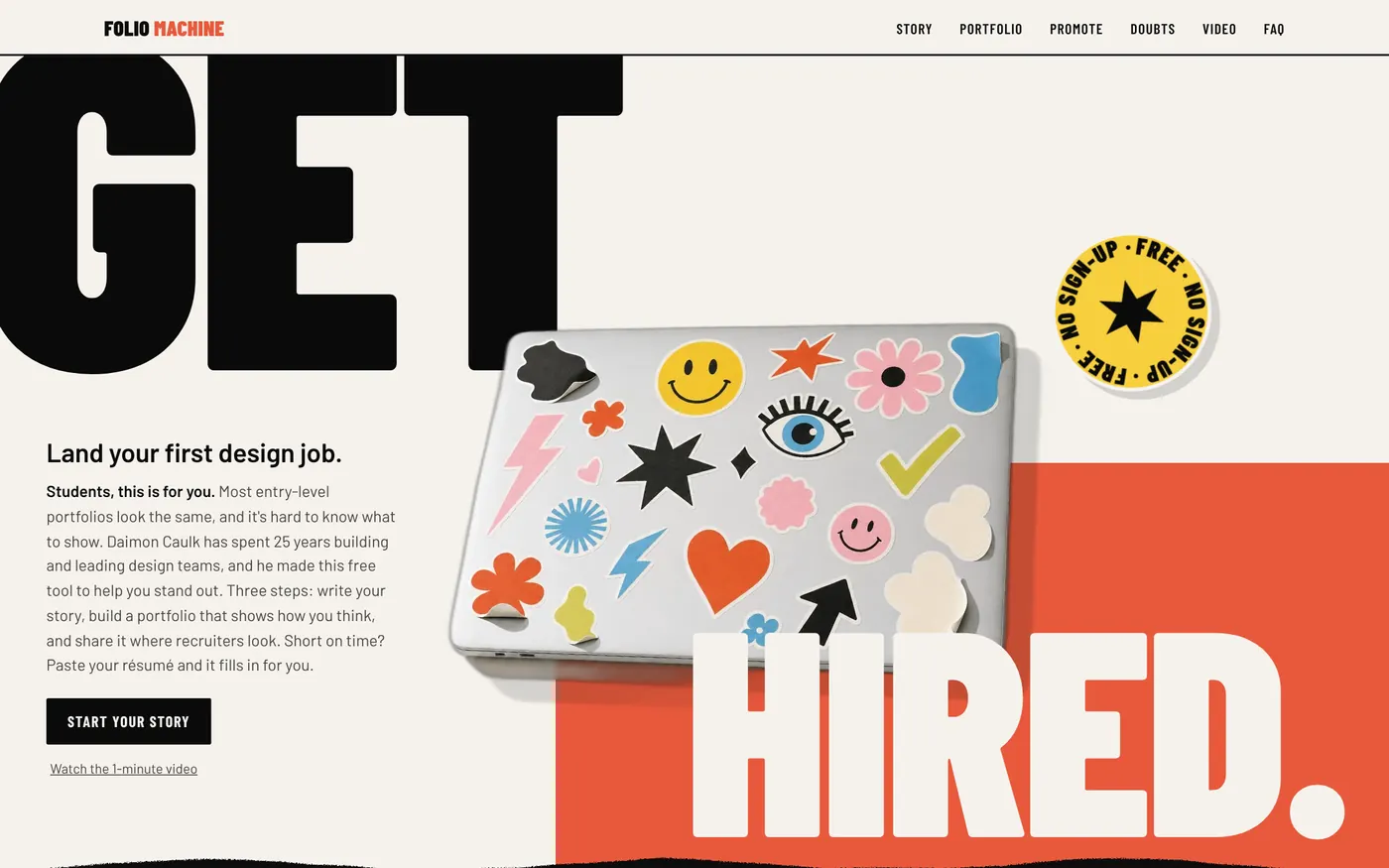
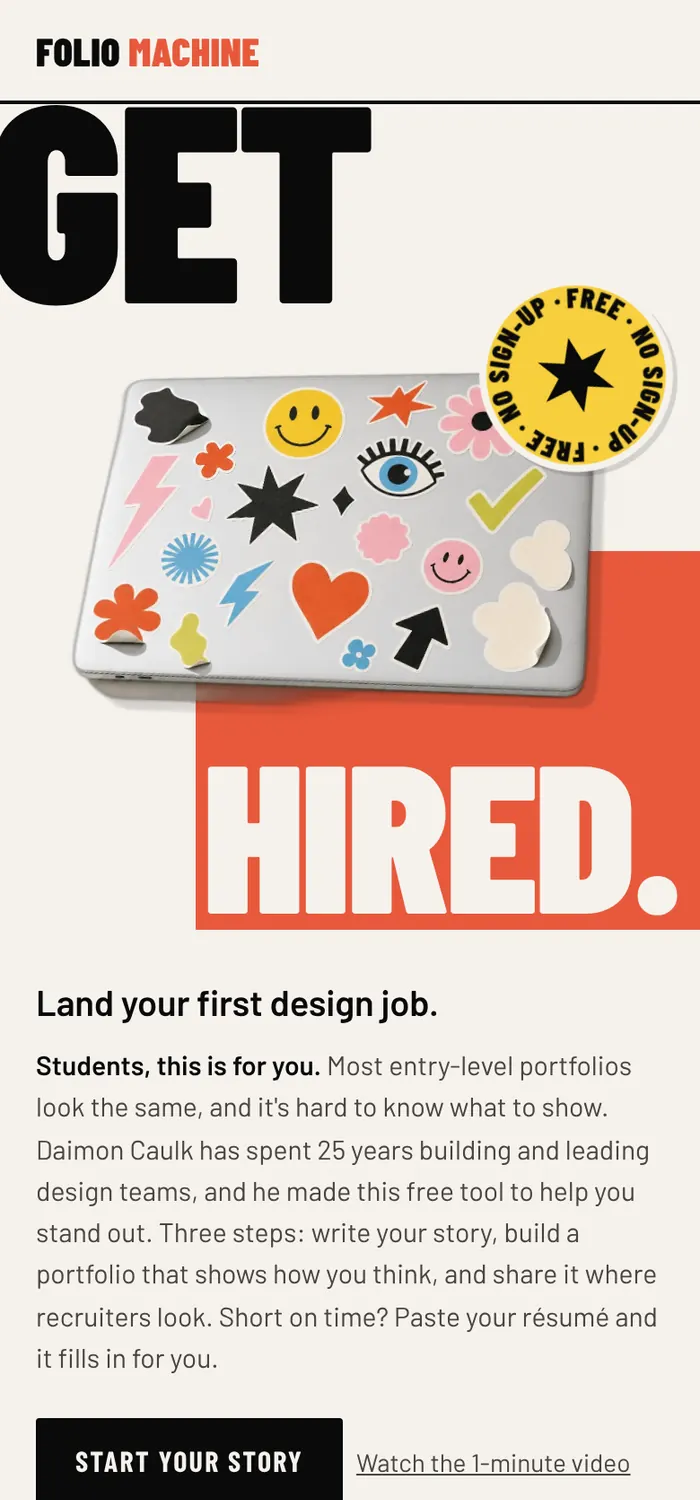
Folio Machine. Get students hired.
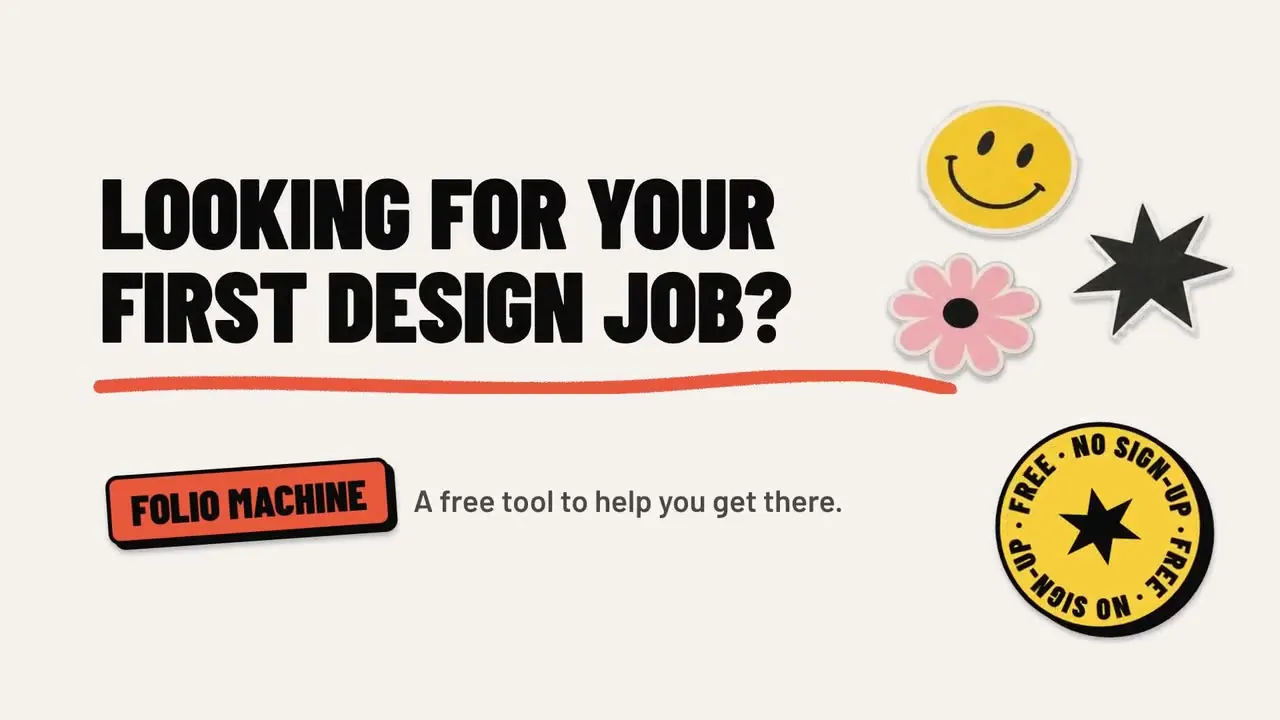
Entry-level design jobs are scarce, and every posting gets hundreds of portfolios that look the same. Daimon Caulk has spent 25 years building and leading design teams. We built Folio Machine with him as a free tool that helps students write their story, build a portfolio that shows how they think, and share it.
- Who it's for
- Design, UX and HCD students and recent grads
- What we did
- Research, personas, three Panl rounds, direction, build, video, launch
- Stack
- One static page, a small Vercel function for AI
- Price
- Free. No account. No ads.
- Live
- foliomachine.com
Most of what stops students is the feeling, not the talent.
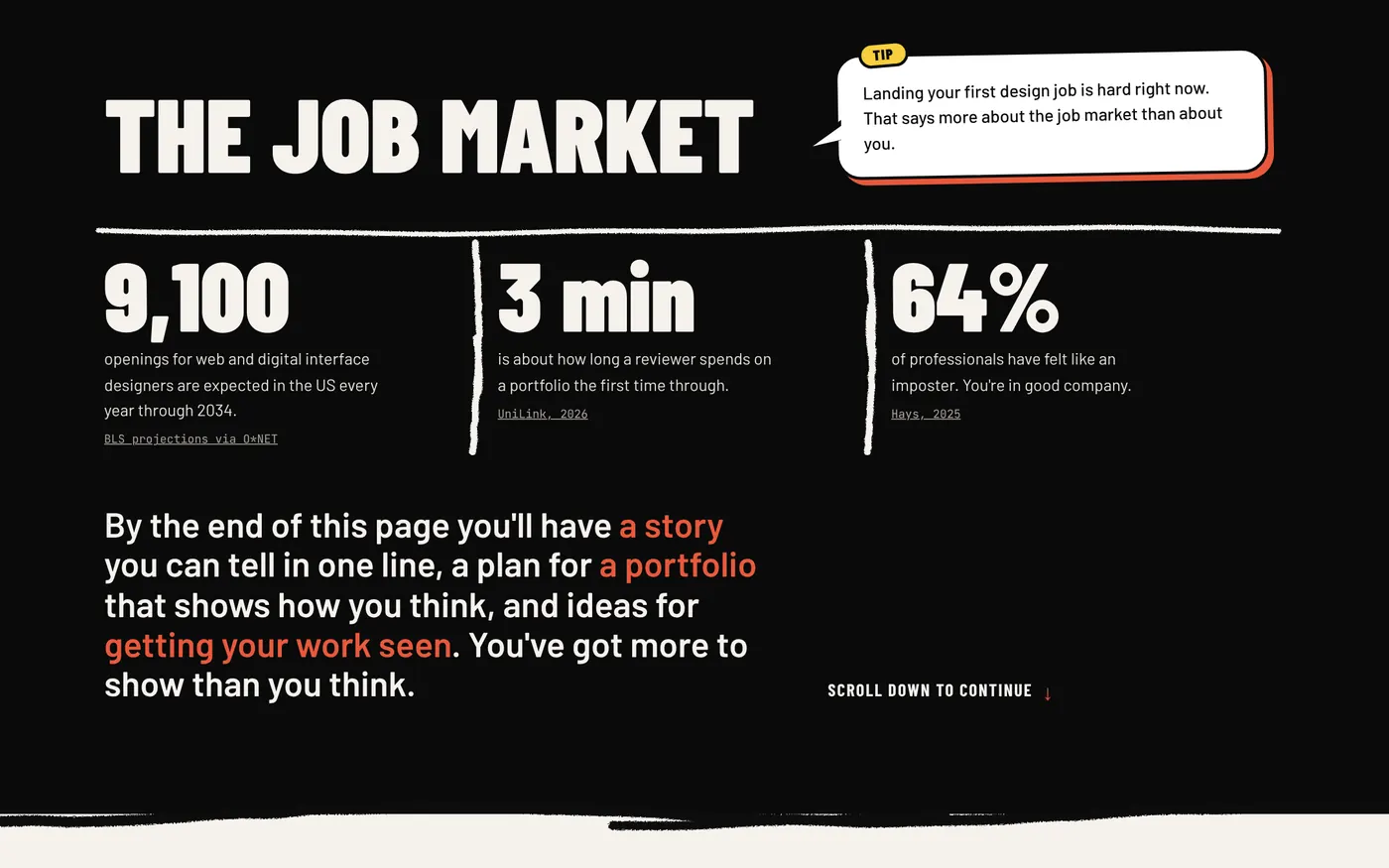
Students don't know what to show. They feel like impostors, and sharing their work feels like bragging. The research backed that up: reviewers spend under three minutes on a first pass, hiring managers care more about explained decisions than polish, and 64% of professionals report impostor feelings.
So the product had to do two jobs. Give students a real portfolio quickly, and make them feel ready to share it.
Four students, four ways of being stuck
The Gauge We built four personas and mapped each to the part of the tool that gets them moving. They're composites, and the Penn State students we mentor will check them next.
The Quiet Maker
- What helps
- Post ideas, a weekly streak, and permission to share unfinished work.
The Pivoter
- What helps
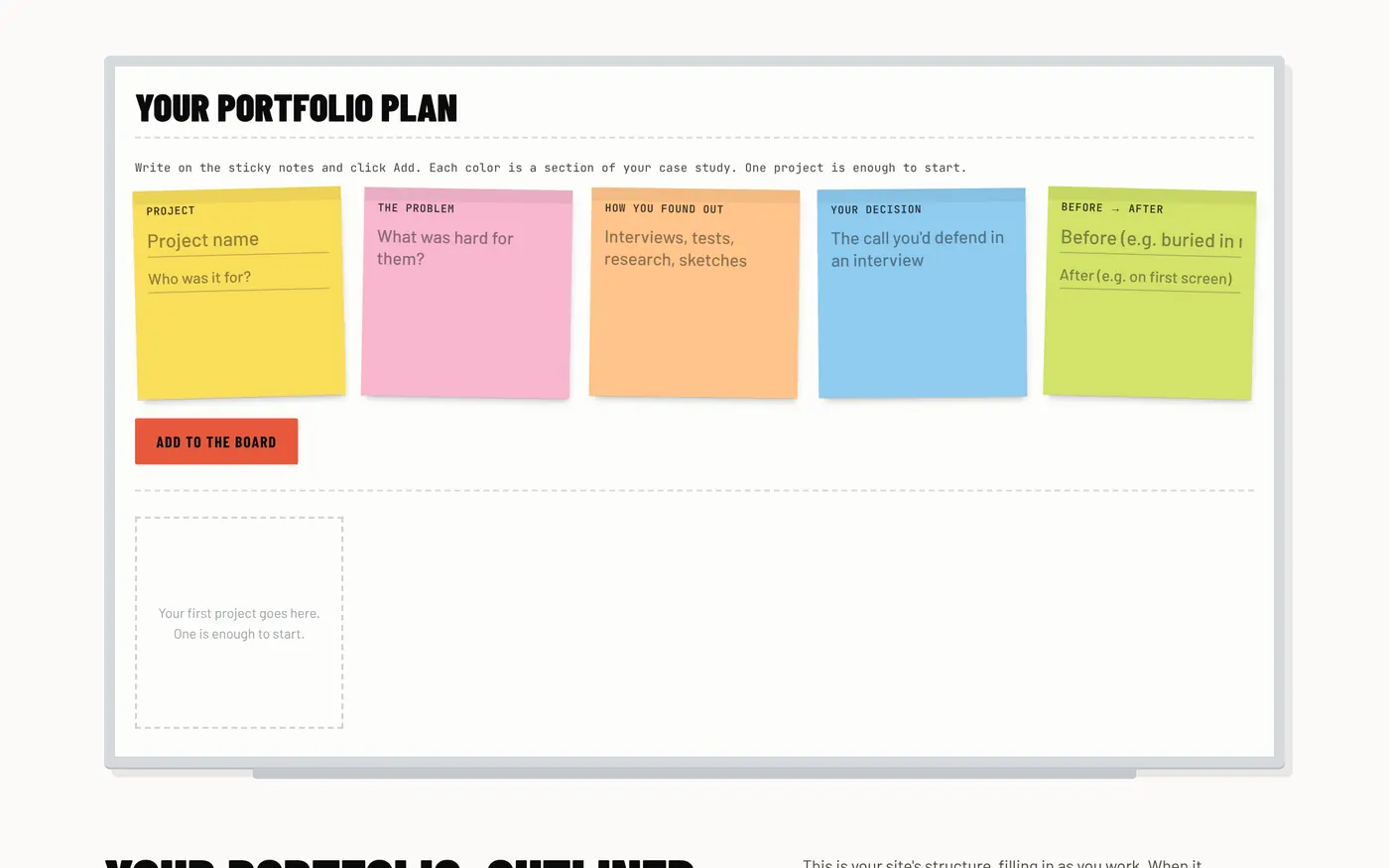
- A story builder and a sticky-note planner that shows thinking, not just finals.
The Researcher
- What helps
- An outline a reviewer can scan, and a "how I found out" section for method.
The Spiral
- What helps
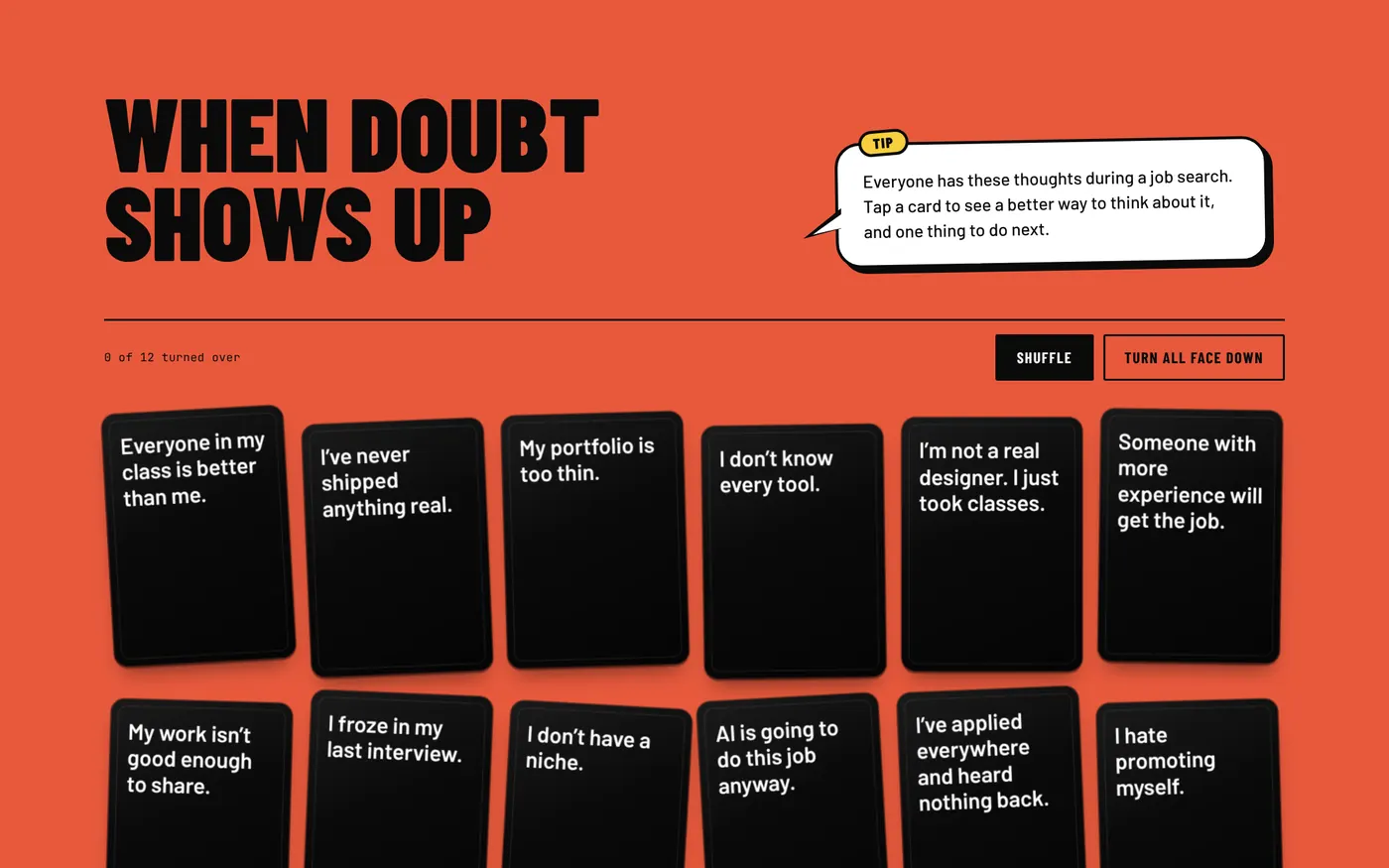
- Doubt cards for the bad nights, and mental-health resources in plain view.
We let the panel push back, three times
The Panl Each round put the pitch, and later the real site, in front of a synthetic panel of design students and recent grads. Every round changed the product.
Round 1: the pitch
"My worry is that a simple template site and a short story won't show my process."Priya, HCD master's student (synthetic)
Round 2: the real site
"I'd be staring at 'Project 4' and 'Project 5' empty boxes feeling behind."Angela, partway through college (synthetic)
Round 3: the hook
"Those are literally the things I think at 2 a.m."Angela, on the doubt cards (synthetic)
Round 1 against round 3, average score out of 10
Value and clarity went up. Trust didn't, and the panel told us why: some students are wary of sending their words to an AI. That's why AI is now optional, labelled and reversible. Panl responses are synthetic and directional, not market proof, and the stimulus changed between rounds.
It looks like a person made it, because one did
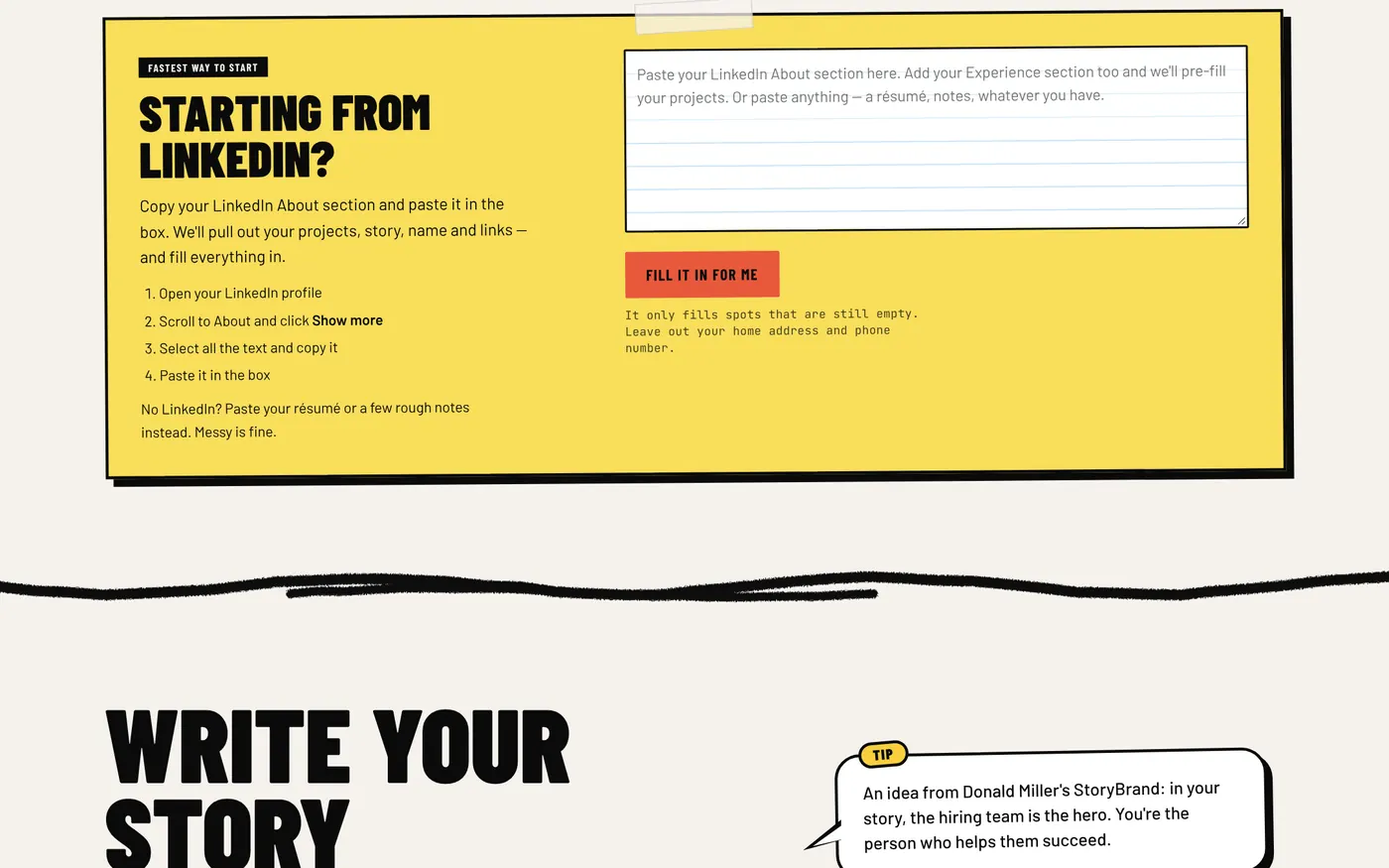
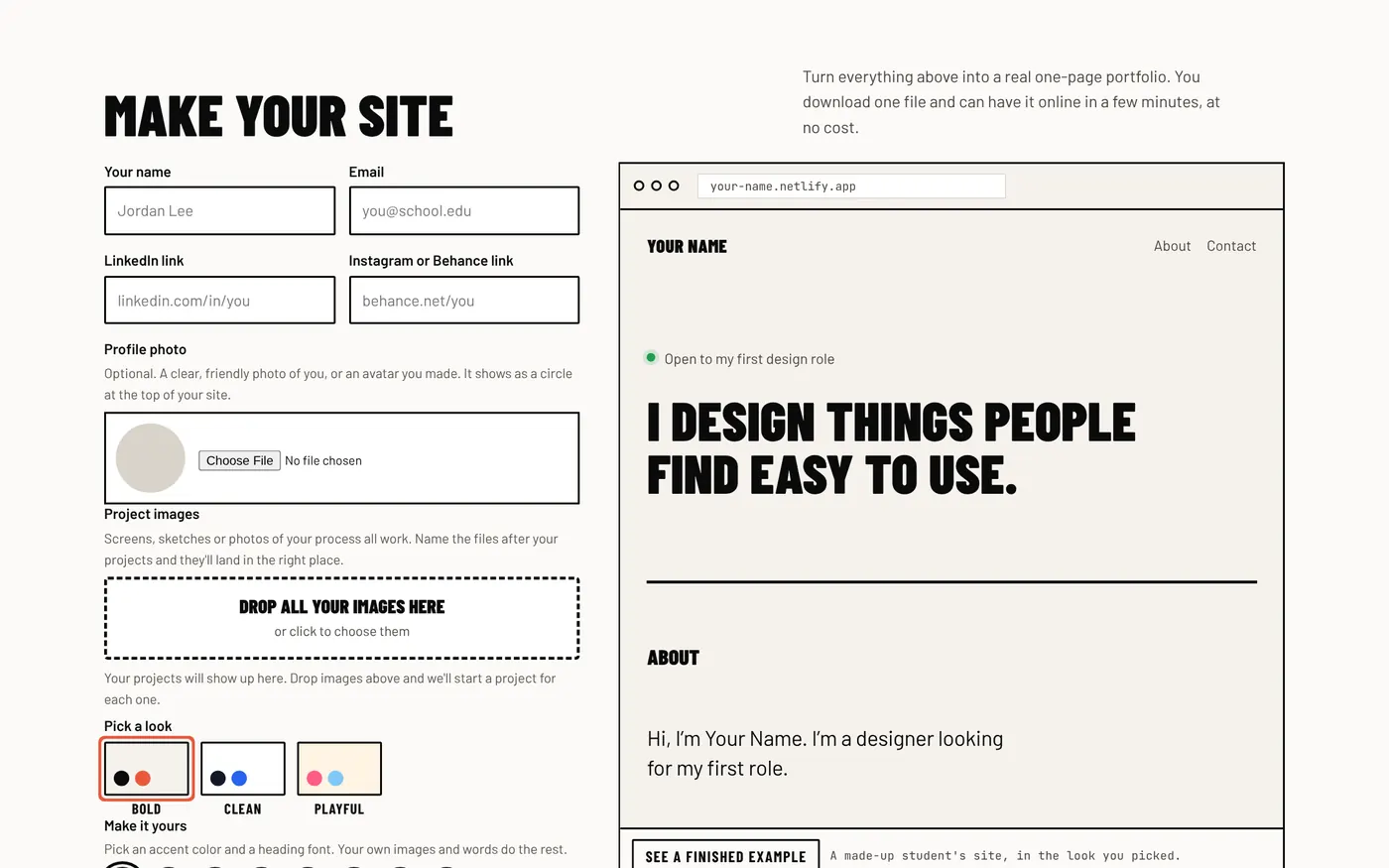
We drew three directions and Daimon picked the poster: giant type, stickers, Sharpie lines, sticky notes and playing cards. Copy rules were strict. Plain student words, nothing clever, no business language, always encouraging and honest about the market.
A panelist put it best: it "looks like a person made it, not a company." That's the brief.
Built like a product, priced like a gift
Folio Machine is one hand-built page with no framework and no build step. AI is a small server function that stores nothing, rate-limits each visitor, and uses the cheapest model that does the job. If the student's browser has a built-in model, it uses that for free.
Every change runs through automated checks before it ships, and an independent reviewer that never saw the build scored the redesigned student site 7 out of 10 against 5 for the old one before we fixed its three objections.
- Automated testsSmoke, hero sizes, builder, intro video, FAQ, profile photo, AI-optional and SEO checks, at desktop and 390px.
- Private by designNo accounts and no cookies. Work stays in the browser. The FAQ says exactly what goes to AI and what doesn't.
- Found by people and AIStructured data, a sitemap and an llms.txt so search engines and AI assistants can explain and recommend it.
- Explainer video63 seconds with stickers, sticky notes and an original lofi soundtrack, plus short cuts for social.
- ShippedGitHub to Vercel, every push to main checked and live at foliomachine.com.
Clarity is a design problem. Trust is earned one honest answer at a time.
The panel believed us most where we were plainest: free, no catch, here's what the AI sees. Next, the Penn State students we mentor use it for real in December, and their portfolios become the next round of evidence.
Ascendra
The same tools, pointed at a federal IT firm's website.